Insight
Why Calm Homes Matter
A note from the founder
When I think of a calm home, the first thing that comes to mind is clarity. A space that is not overcrowded, not visually noisy, and not trying to do too much. Too many objects, too many materials, or unnecessary elements create clutter — and clutter is never calm.
One of the most important aspects of creating a calm home is colour. Colours have the power to make or break a space. I naturally gravitate towards whites, soft neutrals, creams, peaches, taupes, and muted greens or blues. These tones create a sense of ease and openness. I enjoy working with colour, but only where it is truly required — not everywhere.
For elements that are fixed and long-term — walls, flooring, ceilings — I believe in keeping the palette neutral. These are not elements that can be changed easily, and neutral tones allow a home to age gracefully while adapting to life within it. Accent colours can then be introduced through furnishings, artwork, or objects that evolve over time.
Spatial planning plays an equally important role in creating calm. Higher ceilings, thoughtful false ceiling designs, generous windows, and good ventilation all contribute to a feeling of openness. When the eye can travel across a space without constant visual interruption, the home feels larger, lighter, and more breathable. Too many walls, partitions, or compartmentalised layouts often break this flow and make spaces feel congested.
Materials and finishes also matter. Overly glossy surfaces, heavy textures, or dark, overpowering colours can make a space feel closed in and tiring to live with over time. Calm homes are better supported by subtle textures, grounded flooring, and finishes that feel soft rather than reflective.
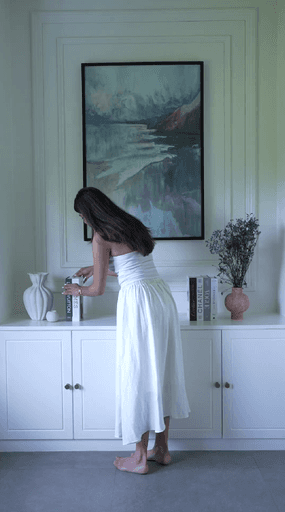
Nature adds another layer of calm. Plants, gardens, balconies with greenery, or even a simple view outside can soften interiors instantly. Similarly, artwork inspired by landscapes or natural elements helps maintain balance without overwhelming the space.
Above all, calm comes from restraint. Mixing too many materials or colours creates visual complexity that can feel overwhelming to live with. A calm home works best when there is a clear hierarchy — a primary colour, a secondary tone, and a gentle accent.
Calm spaces are not about being empty or minimal. They are about being intentional. When a home is designed with thought, balance, and clarity, it becomes a place you don’t get tired of — a space that supports everyday living, quietly and effortlessly.
Because homes should support life, not compete with it.